From Followers to Front Desk: How Hotel Social Media Actually Drives Direct Bookings
Let your social media act as your digital concierge.

TL;DR
Most travelers research your property on social media long before they call, email, or land on your booking page
Around 75% of travelers say social media shapes where they decide to go, and signals like saves, shares, and DMs now matter far more than raw follower counts
Your social channels work like a digital concierge, answering questions and setting expectations at scale, complementing what your front desk does in person
Every question you answer in a comment or DM is a chance to build the trust that turns a curious scroller into a booked guest
Done well, social becomes one of your most reliable engines for direct bookings, which means fewer OTA commissions and a guest relationship you actually own
The guest journey starts way before check-in
Think about the last time you booked a trip somewhere new. Odds are you didn't just find a hotel and reserve a room on the spot. You looked around first. You checked the photos, read a few reviews, maybe pulled up the property's Instagram to get a feel for the place. By the time you actually booked, you'd already formed an opinion.
Your guests do exactly the same thing. Social media has quietly become one of the first stops in the booking journey, and the numbers back it up. Roughly 75% of travelers say social media influences where they choose to go, and most now research a trip across several platforms before they commit. People are looking at your feed to answer a simple question: "Is this the kind of place I want to be?"
So your social presence is doing real work before anyone at your property ever says hello. It's shaping the impression, building the interest, and either earning the click to your booking page or quietly losing it.
Social media is your digital concierge
Here's the way we like to think about it. A great front desk team does something special. They read the room, answer questions before you have to ask, make you feel looked after, and gently guide you toward the things that will make your stay better. That kind of hospitality is the heart of a luxury or boutique property.
Social media is that same instinct, just working digitally and at a much larger scale. Your concierge can look after the guests standing in the lobby. Your social channels can look after multiple requests from of people quietly considering a stay, all at once, at any hour.
When someone drops a comment asking whether you're pet friendly, that's a concierge moment. When a traveler sends a DM wondering if the rooftop is open in October, that's one too. And these moments happen constantly.
Travelers are far more comfortable firing off a quick message to a page than picking up the phone, and the hotels winning attention right now are the ones that actually reply, ask questions back, and treat every interaction like a warm front-desk exchange.
None of this replaces your in-person team. It extends them. The same care your staff show at check-in can live in the way you answer a comment, the tone of your captions, and the little details you choose to share. It's hospitality, delivered through a screen, to people who haven't arrived yet.
Answering questions is where bookings are won
Most people don't book the second they discover you. They have questions first, and every question is really a small moment of hesitation. Is it worth the price? Will it suit a couple, or is it more of a family spot? What's actually nearby?
This is where an active social presence quietly earns its keep. When a potential guest can scroll your feed and see the answers, or send a quick message and get a genuine, helpful reply, that hesitation starts to melt. You're not just posting pretty pictures. You're removing the reasons someone might have said "maybe later" and closed the tab.
The signals that matter most have shifted, too. Follower counts look nice, but saves, shares, replies, and DMs are the real indicators that your content is connecting. A save means someone is planning. A DM means someone is seriously considering. Those are the people at the edge of booking, and how you handle that conversation often decides whether they do.
Why direct bookings are the whole point
Let's talk about why this matters to your bottom line, not just your brand.
When a traveler discovers you on social, falls for the place, and books directly through your website, something valuable happens. You keep the commission you'd otherwise hand to an online travel agency, which typically takes somewhere between 15% and 25% of the booking. You also own the relationship from that point on. You have their details, you can welcome them properly, and you can invite them back yourself instead of paying to reach them again.
Direct bookings from social also tend to come from guests who already like you. They didn't stumble onto a rate on a comparison site. They chose you because something about your feed or your reply made them feel like this was their kind of place. Those guests often arrive with a warmer feeling toward the property before they've even walked in.
That's the real path from followers to front desk. Someone finds you, connects with what they see, gets their questions answered, books directly, and shows up already halfway in love with the place.
Let's turn your followers into guests
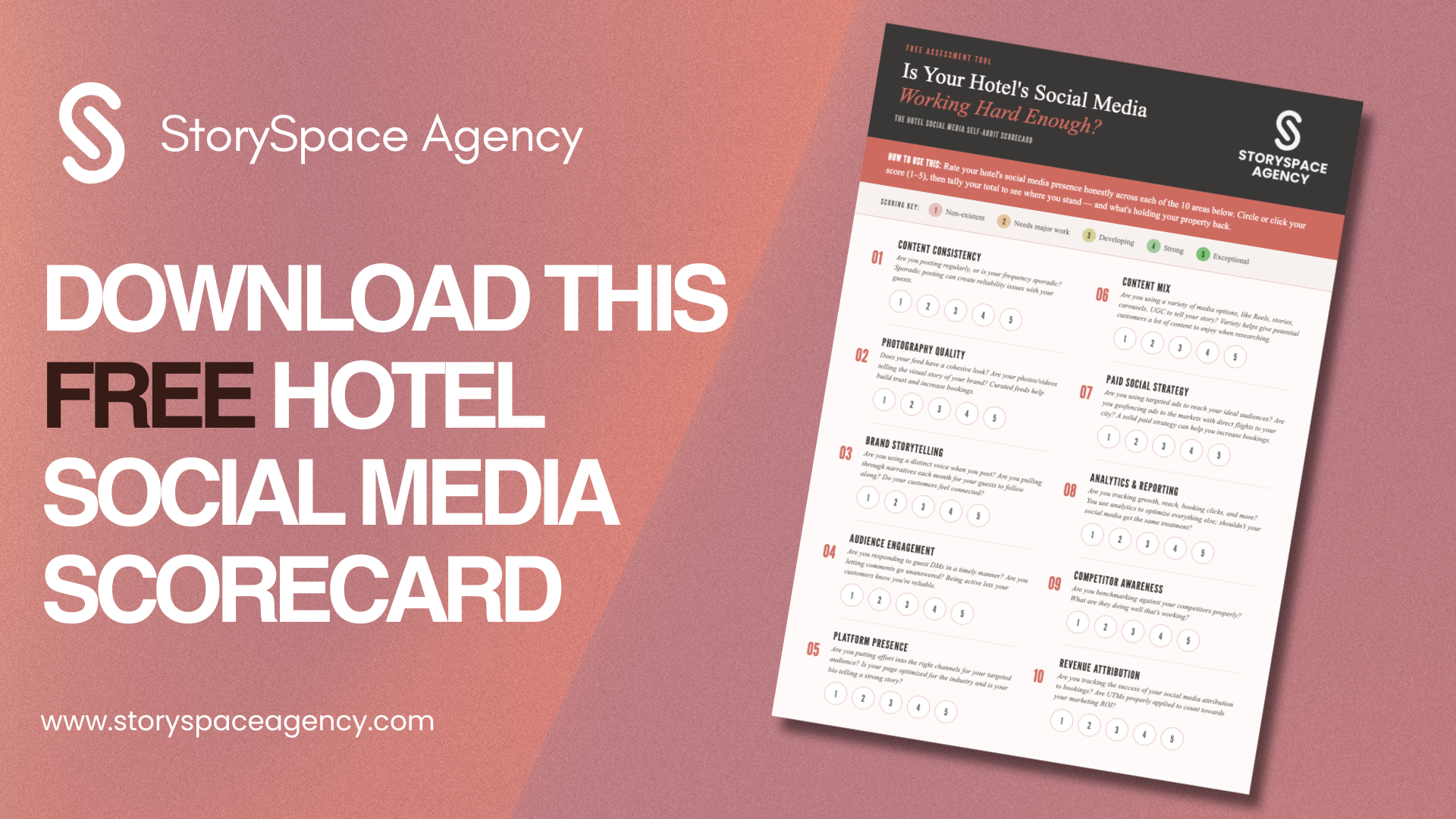
At StorySpace, we're a hotel social media agency for luxury and boutique properties, and this is exactly the work we love. We help hotels build a social presence that welcomes future guests as warmly as their front desk welcomes the ones already there, and turns all of it into direct bookings. Take a look at how we can help.