TL;DR
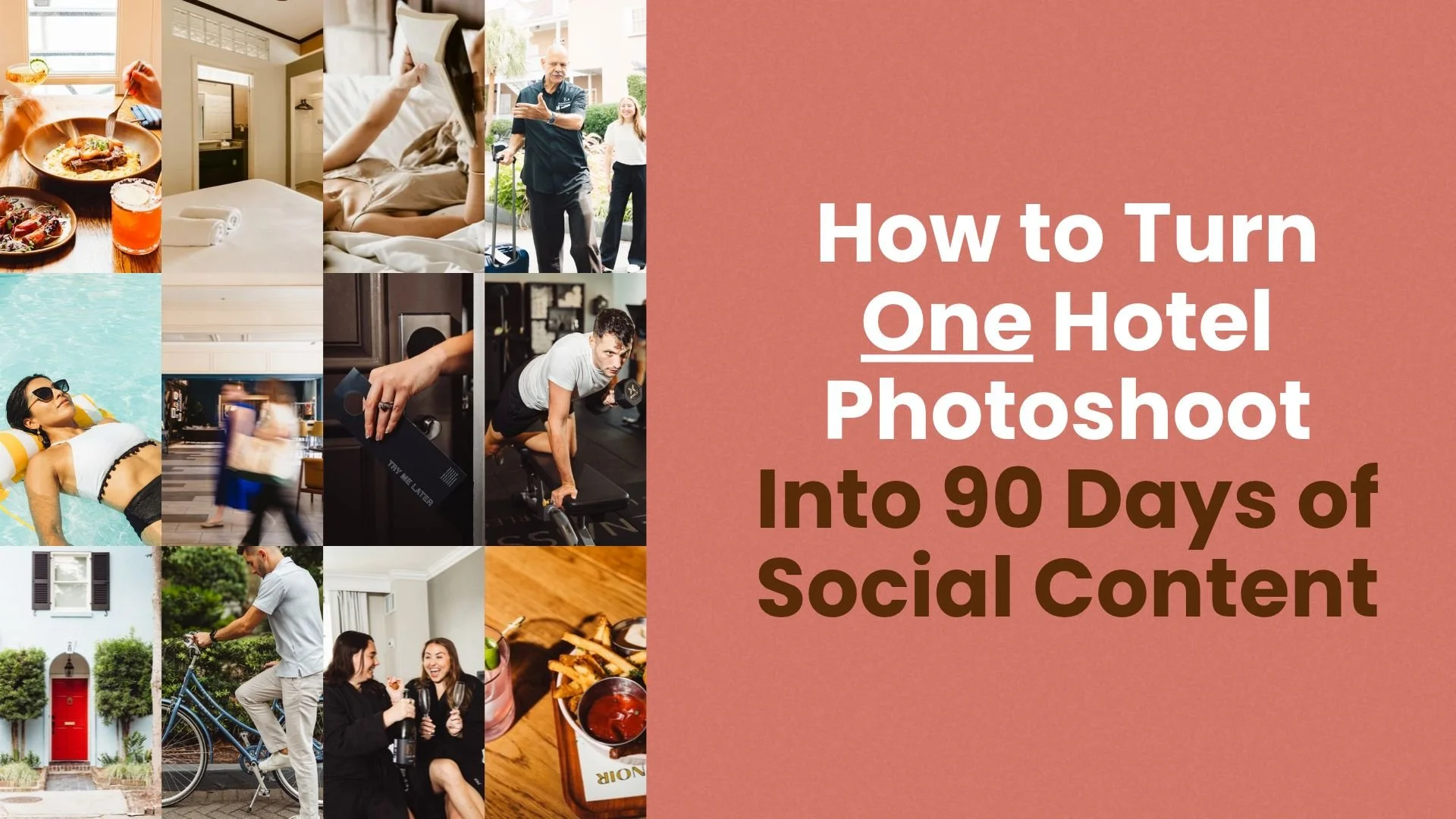
Posting 15 times a month means you need around 45 strong, distinct images for a 90-day quarter, before you count Stories
Every location on property can give you 4 or 5 shots if you plan wide, medium and detail frames for it
Changing the angle, the time of day or what the guest is doing makes the same spot feel new on your feed
The best hotel photographers plan a shoot around your social calendar, not just your website hero images
Spread locations and shot types across the calendar so nobody scrolling your grid sees the pool three posts in a row
Introduction
Why Hotel Feeds Go Quiet After a Shoot
If you work at a hotel, you're probably in the middle of budget season right now. Maybe marketing just took a cut. Maybe you finally got the money you've been asking for since last spring. Either way, whatever you spend on photography next year needs to stretch further than it has before.
And for a lot of hotels, it doesn't stretch very far. I see the same thing happen over and over. The property books a photographer for a day and gets back a beautiful gallery. Wide shots of the lobby, the pool with nobody in it, every room type made up perfectly. The website looks great, and the feed looks great for about two weeks.
Then the new photos run out. By week three or four, the marketing coordinator is digging through an old Dropbox folder for anything that hasn't been posted yet, and the grid starts filling up with event flyers or even AI-generated iterations of old photos to make them look “new”.
In this blog I run through my tips for how to turn a one-day photoshoot into 45 fresh photos (and video) for your hotel. I share my tips for capturing, different angles to get to shake up a scene, and even provide a free downloadable planner at the end so you can use for your own shoots.
The Math: What 90 Days of Content Actually Takes
If you are like most of the hotels we work with, you’re probably posting somewhere around 15 times a month (so that way you stay consistent in feed, of which social algorithms prioritize). However, trying to stay consistent over a quarter’s time has you posting about 45 posts. And that’s a lot of assets to churn through. But, the reality is, while thats a lot of assets, in this day and age of social first, its necessary, and is a major part of how your hotel gets seen and noticed.
Does 45 sound like a lot for one day? Sure, but it's very doable. You just won't get there by wandering the property and shooting whatever looks nice. You get there by deciding before shoot day exactly which spots you're shooting and how many different images each one needs to give you. As with most things in life, it comes down to planning, strategizing, and execution.
Plan the Hotel Photoshoot for Social First
Build the Shot List Location by Location
Start by walking your property and picking a few areas worth shooting. For most hotels that's the pool, a standard guest room, your best suite, the restaurant, the bar, the lobby, and the exterior (I even like to throw in city, beach, nature shots too so that customers can get a sense of whats around the hotel or within walking distance). Then add whatever makes your place yours, like a rooftop, a spa, a garden, or the wellness activities you run.
Give each area a target of 4 or 5 finished shots.
When you're deciding who and what goes in those shots, think about who actually books with you. If your weekends are mostly couples, put a couple at the pool. If you're trying to grow midweek corporate business, you want someone at the lobby bar with a laptop open and a glass of wine. I wrote more about matching your photos to your guests in how hotel images influence guest decisions.
Wide, Medium and Detail Shots
I use the same framework for every single location, and it's simple. It mostly comes down to how close the camera is to the action.
A wide shot shows the whole space. At the pool, that's the deck, the water, the loungers and the sky. It tells someone what kind of place you are and gives them the full picture (no pun intended) of your spaces.
A medium shot puts a person in the space doing something. Your guest reading on a lounger, or a couple sharing a drink at the bar. This is where somebody scrolling starts to picture themselves at your hotel.
A detail shot gets in close. Light on the water, or hands massaging a back. Detail shots tend to get left off hotel shot lists, and I'd fight to keep them on. They end up being some of the most useful images in the whole library, because you can use them as Story backgrounds, carousel slides, ad variations and text overlays for months - they are truly work horses for your content flow.
Shoot Video in the Same Session
Every time a setup is ready, grab some vertical video before you move on. Your guest walking into the pool works as a photo and as a six-second Reel, and it only costs you a few extra minutes with the same model in the same light.
Expedia Group surveyed travelers in 2025, and 71% said video influenced where they decided to go, and as more and more social platforms push video first content, its a necessary part of your marketing strategy.
Keep the clips short. Expedia's research found people need about two to nine seconds per scene to take in what they're looking at.
Hiring Hotel Photographers Who Think in Social
Some photographers think entirely in hero shots - and thats perfectly fine. Some of them have built entire careers around just that, but for your social game, you need lifestyle shots to mix in, and thats when you need a photographer who gets social media.
You want a photographer who walks out to the pool and starts planning four or five different posts ideas. Or starts snapping pick-up shots of coffee from the lobby so you can use for advertising. Someone who sees the potential in getting a lot of use out of your photos and thinks about the posting and storytelling potential is going to be such a worthwhile investment for your hotel. Here are a few questions I would ask to any potential photographer you are considering bringing on to capture content for you:
How many finished images do you plan to get from each location?
Do you shoot vertical for Reels and Stories?
Can you direct a model through a sequence so the shots connect?
Does your license cover social, paid ads and the OTAs? And for how long?
Can you match your editing style to our hotel’s brand guidelines?
One Location, Five Shots: A Hotel Photography Shot List
Here's how the wide, medium and detail approach plays out at real spots around a hotel.

The Pool
Book one model, or a couple, for about an hour and work through it in order:
Wide: your guest walking down the steps into the pool, with the whole deck and the sky in the frame.
Detail: a close-up of the water. The ripples, the light, the edge of the tile.
Medium: the same guest stretched out on a lounger with a good book.
Detail: a server's hand setting a cocktail down on the side table.
Bonus: drop down to water level and shoot back toward the row of loungers. Or shoot straight down from a balcony if you've got one.
One model and about an hour gets you five posts that look completely different on your grid. Spread them across the quarter and nobody's going to realize they came from the same afternoon.
The water close-up and the cocktail shot barely need a model at all, which makes them easy to reuse later for promotions, pool hours or a summer rate.

The Guest Room
Most hotel room photography stops at the wide. You absolutely need that one for your OTA gallery, but a room can give you a lot more.
Wide: the full room with every lamp on and the curtains open, shot from about chest level.
Medium: someone pulling back the curtains in the morning, with light coming across the bed.
Detail: coffee and a paperback on the nightstand, or a hand smoothing out the duvet.
Detail: the tub filling up or the rain shower running. Bathrooms help sell rooms, so give yours its own post.
Bonus: the view from the bed. Drinking wine in bed to set a staycation vibe. Keycard on the nightstand. View outside the window.

The Restaurant and Bar
The restaurant usually needs its own time block, since you're working around the kitchen and the dinner rush. Talk to your chef ahead of time so the dishes come out when the light is right.
Wide: the dining room during service, full tables and warm light.
Medium: your bartender mid-pour. Use your real bartender if they're up for it. Regulars love seeing a face they know on your feed.
Detail: an overhead of your signature dish.
Detail: two glasses coming together for a cheers.
Bonus: the empty bar at golden hour, right before you open. It's quiet and a little moody, and it gives a busy grid some breathing room.
The Lobby and Arrival
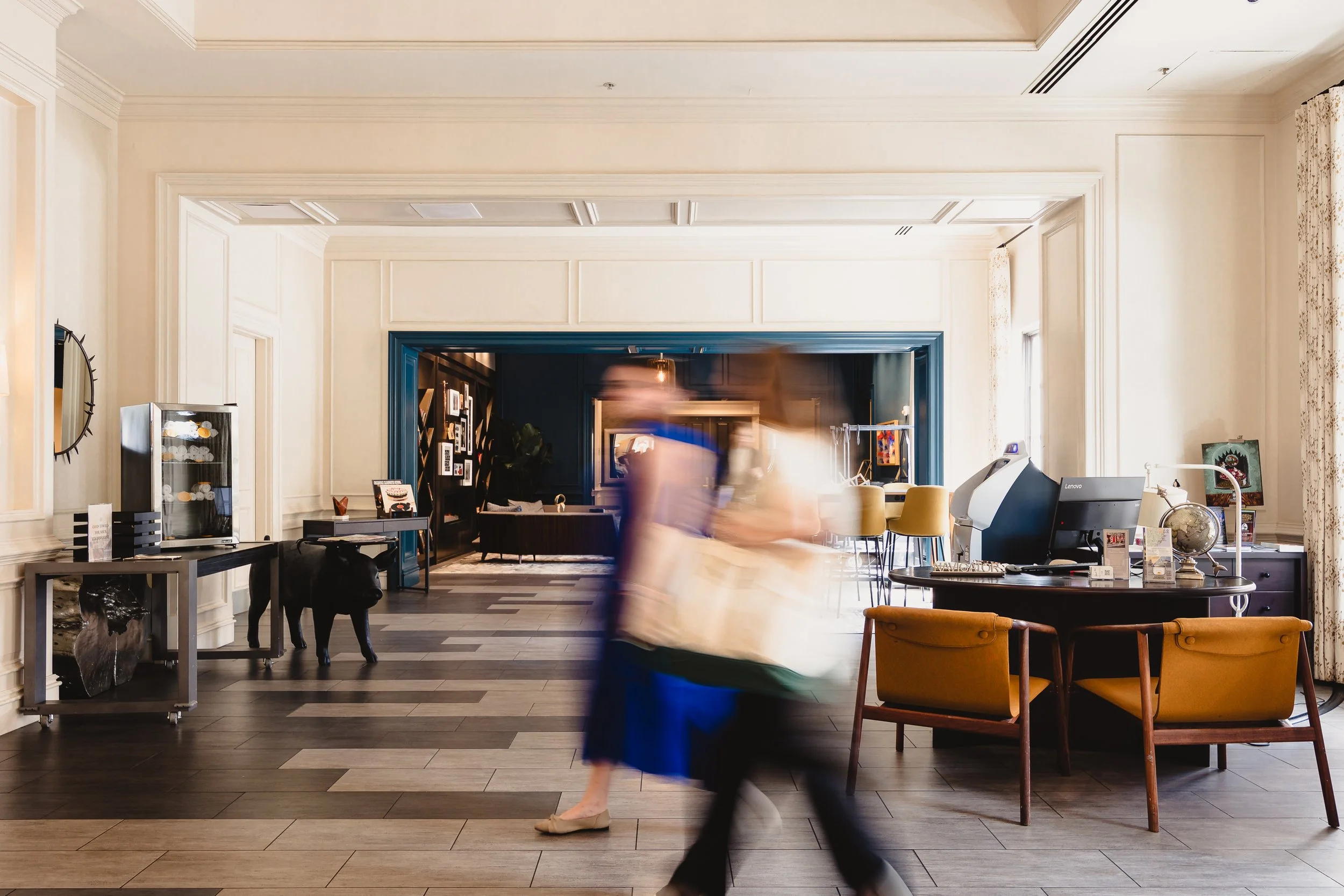
Expedia's eye-tracking research found that lobbies barely registered with people shopping for hotels online, and honestly, I believe it. Nobody books a room because of the front desk. However, arrival moments work differently on social. They're the start of the trip, and people respond to that.
Wide: the exterior at twilight, lights on the exterior lit up.
Medium: a guest walking through the front door with a weekend bag over their shoulder. Or the doorman opening the door for guests.
Detail: the room key being handed across the desk.
Detail: the welcome amenity waiting in the room, or the candy jar at the front desk that every kid who's stayed with you remembers. Refreshments in your lobby. Such as for Renaissance brands, they host a nightly Daily Ritual, which provides free drinks and snacks. Thats definitely worth capturing and gives you a unique selling point over other hotels.
Spa, Rooftop and Everything Else
Same approach, quicker pass. At the spa, get a wide of the treatment room, a therapist's hands mid-massage, a close-up of the oils and a stack of warm towels. On the rooftop, get the skyline wide and then a drink sitting on the ledge with the city soft in the background. Or guests hanging around the fire pit talking and drinking.
Don't skip the meeting rooms either. They're never going to be your most-liked post, but your sales team needs current photos for group and wedding proposals, and it's a lot cheaper to grab them on a day you've already booked.
Making Every Shot Feel Fresh
Forty-five images from one day can easily end up looking like one long day. A good photographer works against that the whole time, and these are the moves I'd ask for.
Change the height. The same lounger looks different from water level than it does from straight above.
Shoot through something. A palm frond in the foreground or the edge of a doorway adds depth and makes the frame feel like a different spot.
Follow the light. The pool at 9am and the pool at 6pm look like two different hotels. If you can split your shoot across a morning and an evening, do it.
Bring a wardrobe change. Put your model in a swimsuit for one set and a linen shirt for the next. Nobody scrolling is going to notice it's the same person.
Shoot vertical and horizontal of every setup. Vertical goes to Reels and Stories, and horizontal goes to your website and OTAs. That way all of your hotel marketing photography comes from one library, and your property looks like the same place everywhere a traveler finds it.
Using Your Photos for Social Media Marketing
One Photo, Several Jobs
Take that shot of your guest on the lounger. It goes up as a feed post in week one. A month later it's a slide in a "weekend at the pool" carousel. After that it can be the background for Summer deals paid ad aimed at couples within driving distance and your Google Business Profile cover for the summer.
Most people will only ever see it in one of those places, so don't feel bad about using it in all of them.
Captions Do the Work on Reused Images
A lot of what makes hotel Instagram content feel new is the caption. The cocktail shot can go out as a happy hour post in week two and a "what are your Friday plans?" post in week ten. The water close-up works for a pool hours update or a summer rate.
I'd still wait at least six weeks before posting the same image to your feed twice. Stories and ads can repeat a lot sooner, since Stories disappear after a day and ads are mostly reaching people who don't follow you yet.
Building a Social Media Content Calendar for Hotels
Spread Your 45 Shots So the Grid Never Repeats
When the final images come in, sort them by location and shot type before you schedule anything. Then rotate through them.
The rule I'd follow: never two pool shots in a row, and never two wides in a row. A typical week might look like this:
Monday: twilight exterior (wide)
Wednesday: bartender mid-pour (medium)
Friday: water close-up with a weekend caption (detail)
Sunday: curtains opening in a guest room (medium)
When someone lands on your profile and scrolls down, it should feel like there's something happening all over the property. And you should be mixing up your shot lengths - wide, medium, detail, then repeat.
Leave Room for Live Moments and Guest Content
I'd plan about 70% of your posts from the shoot and leave the rest open. That gives you room for the live band on the patio on a Saturday night, or the guest who got engaged by your beach and tagged you, or you have an influencer’s content going live so youre not overcompeting with them.
Those posts make your feed feel current. Guest content also carries a kind of trust your own content can't.
Measuring Your Hotel Social Media Marketing Strategy
What to Track Beyond Likes
Likes are nice, but I'd pay closer attention to saves, shares, profile visits and link clicks. If your booking engine can track it, watch the direct bookings coming from social too.
Break your results down by location and shot type. If the massage details beat the wides of the lobby every month, put more details on your next shot list. After a few quarters, your hotel content strategy gets a lot sharper just from paying attention to what worked.
Where Paid Social Fits
Your best organic posts are usually your best ad candidates, because people have already shown you they'll stop for them.
We ran a $100 campaign for one hotel that brought in $5,100 in booked nights. Targeting and timing played a big part in that. But the ad still needed an image that made someone stop scrolling, and when you've got 45 to test, you find the winners quickly.
Knowing When It's Time to Shoot Again
You'll usually see the signs. The season changes and your feed still looks like July. The chef rolls out a new menu, or you finally finish renovating the bar. Or the reused images just stop getting the saves they used to.
We usually recommend a full shoot every year or two, with smaller seasonal shoots in between. A half day in October with the fire pits lit can carry a whole fall quarter.
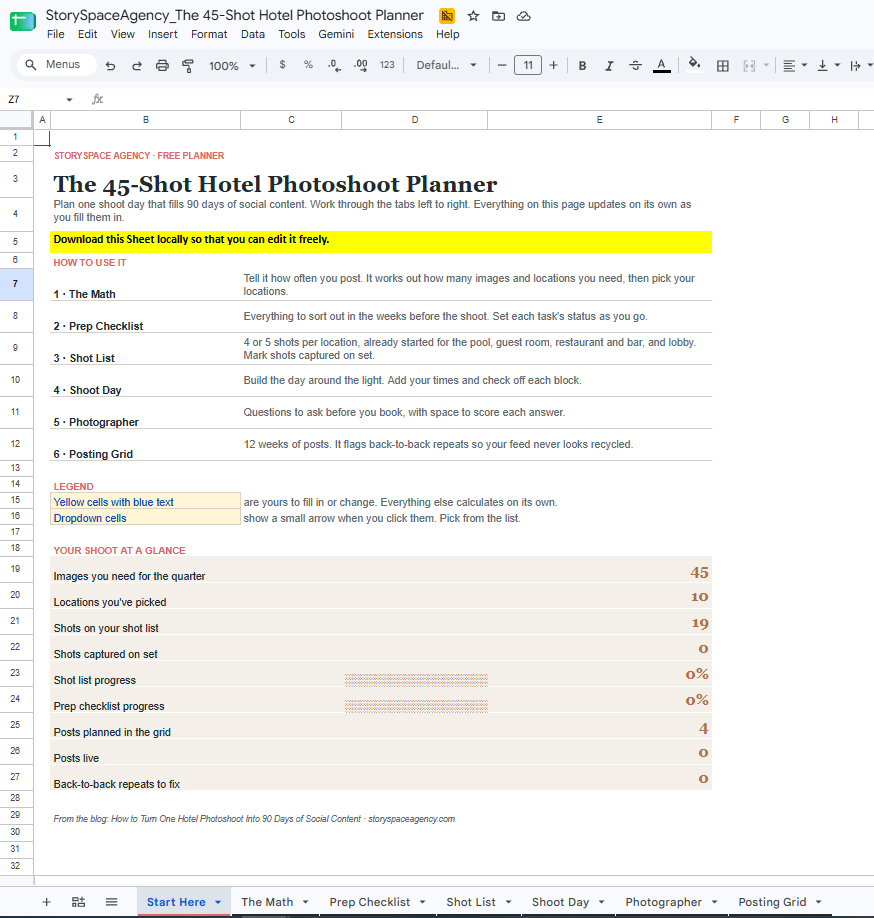
Download the 45-Shot Hotel Photoshoot Planner
I put everything from this post into a free planner you can print out and bring to your next shoot. It walks you through the 45-shot math, gives you a shot list page for every location on your property, and has a prep checklist for the week before. There's also a shoot-day schedule built around the light, a set of questions for vetting photographers and a 12-week posting grid so your feed never repeats itself.
If you are looking for a professional photographer to capture your hotel’s story, let’s connect!